Truck-mounted extraction, industrial drying, and mold prevention done right

Water Heater Leak Water Removal in Arkansas

Water Heater Leak Water Removal in Arkansas means shutting off the tank, pulling every gallon of standing water out of your floors and walls, and drying the structure before mold sets in. We handle tank failures, burst supply lines, and rusted fittings in homes and small commercial buildings across the state. Call (833) 640-1438 and we roll a truck the same day.

↗
Fast online booking

Request service today

Tell us what is happening. Our local team will confirm your visit shortly.

No spam. No obligation. Just practical help.
Thanks — we'll call shortly to confirm your visit.
Water Heater Leak Water Removal
Careful work. Honest options.
About this service

What Water Heater Leak Water Removal in Arkansas Involves

Water Heater Leak Water Removal in Arkansas is the process of stopping the water source, extracting standing water from floors, baseboards, and wall cavities, and drying the structure to ANSI/IICRC S500 standards so mold never gets a foothold. A 40-gallon tank holds roughly 320 pounds of water, and most of it ends up on your floor within minutes. We start with a moisture meter and thermal imaging camera to map how far the water traveled, then pull it out with a truck-mounted water extractor and portable extraction unit.

Arkansas homes deal with water heater failures year-round, but the worst calls hit in January and February when frozen pipe bursts and cold-inlet cracks stack up on the same night. Older homes in the Delta and along the Arkansas River bottom tend to have water heaters in closets, crawl spaces, or garages where a slow drip can soak subfloor and insulation for weeks before anyone notices. If you need emergency water heater leak cleanup in Arkansas, we answer the phone at 2 a.m. and dispatch from the nearest crew.

  • ✓ Same-Day Water Extraction
  • ✓ Structural Drying Done Right
  • ✓ Mold Prevention From Day One
  • ✓ Insurance Documentation
What's included

What Our Water Heater Leak Cleanup Includes

Every job starts with the same core package: source control, extraction, drying, and documentation. What changes is the size of the affected area and whether materials need to come out. Here is what is covered on a standard residential call.

✓

Source Shutoff and Safety Check

We confirm the water is off at the tank and the power or gas is killed before anyone touches a wet floor. If the shutoff valve is seized, we work around it safely and note it for the plumber.

✓

Moisture Mapping

Thermal imaging camera and moisture meter readings on every affected wall, floor, and ceiling. You get a written map showing where the water went and where the drying equipment is placed.

✓

Full Water Extraction

Truck-mounted extractor for the bulk, portable extraction unit for tight spaces, and a wet/dry vacuum or submersible sump pump for crawl spaces and low spots. Most jobs pull 30 to 80 gallons.

✓

Antimicrobial Treatment

Antimicrobial solution applied to affected framing, drywall edges, and subfloor. This is the step that stops mold from colonizing while the structure dries.

✓

Drying Equipment Setup

Industrial air movers and commercial dehumidifiers placed per the moisture map. Daily monitoring with readings logged until the structure hits dry standard.

✓

Insurance Documentation

Photos, moisture logs, and an Xactimate line-item scope delivered to you and your adjuster. This is what gets claims approved without a second inspection.

How it works

Our Water Heater Leak Cleanup Process

01

Emergency Call

You call (833) 640-1438 and describe what you see. We walk you through shutting off the water at the tank and killing power to the unit if it is electric. A crew is dispatched from the nearest Arkansas location, and most metro calls get a truck on-site within 60 to 90 minutes.

02

Inspection and Mapping

We use a thermal imaging camera and moisture meter to trace where the water went. Water travels along joists and under vinyl plank, so the visible puddle is rarely the whole story. This step takes 20 to 40 minutes and tells us exactly what equipment goes where.

03

Extraction

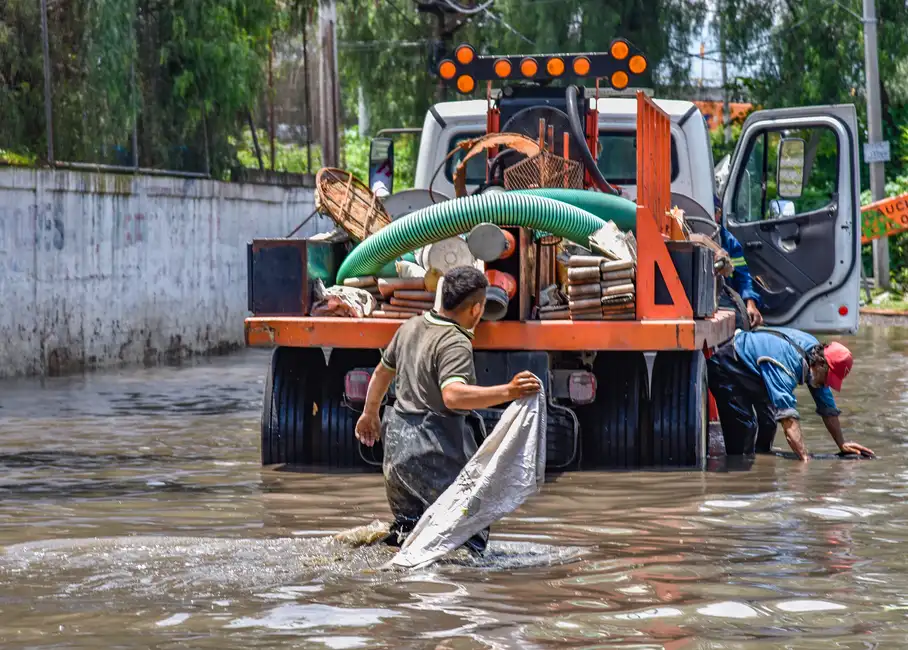
A truck-mounted water extractor handles the bulk of the water, and a portable extraction unit gets into closets, under sinks, and behind the tank. A submersible sump pump or wet/dry vacuum clears deeper pockets in crawl spaces. Most jobs pull 30 to 80 gallons before we switch to drying.

04

Drying and Monitoring

We set industrial air movers and commercial dehumidifiers, sometimes a desiccant dehumidifier in tight crawl spaces. You get daily moisture readings and photos. Standard dry time is three to five days, and we do not pull equipment until the framing reads dry against a baseline taken from an unaffected room.

05

Final Walkthrough

We pull equipment, verify moisture levels, and hand you a completion report with photos and readings. If any drywall or baseboard needs replacement, we note it. If the tank itself needs replacing, we coordinate with a licensed plumber so you are not juggling two contractors.

Tools & methods

Tools and Methods We Use

Purpose-built equipment, used by trained technicians — so the job is done accurately the first time.

Truck-Mounted Water Extractor

Pulls the bulk of standing water out of carpet, pad, and hard flooring in a fraction of the time a portable unit takes.

Portable Extraction Unit

Gets into closets, under sinks, and behind the water heater where a truck mount cannot reach.

Thermal Imaging Camera

Finds water hidden behind walls and under floors by reading temperature differences.

Moisture Meter

Gives us hard numbers on framing and drywall so we know when the structure is actually dry, not just dry to the touch.

Dri-Eaz and Phoenix Air Movers

High-velocity air that evaporates moisture off framing and floors so dehumidifiers can pull it out of the air.

Commercial Dehumidifier and Desiccant Dehumidifier

Pulls moisture out of the air. Desiccant units handle tight, cool crawl spaces where refrigerant units lose efficiency.

Submersible Sump Pump and Wet/Dry Vacuum

Clears standing water from crawl spaces, low spots, and areas too tight for larger extraction gear.

Real results

Before and after.

Overnight Tank Failure in Little Rock

Before

A 50-gallon electric tank let go at 11 p.m. Water ran down a hallway into two bedrooms, soaking carpet, pad, and the base of the walls. The homeowner found it at 6 a.m. with standing water still on the floor.

After

We extracted 62 gallons, pulled wet carpet and pad, and set 8 air movers and 2 commercial dehumidifiers. Framing hit dry standard in four days. No mold, no warped subfloor, and the insurance claim was approved on the first pass.

Crawl Space Drip in Conway

Before

A rusted fitting on a gas water heater dripped for weeks before the homeowner noticed a musty smell in the kitchen. Insulation under the floor was saturated and joists were showing early mold growth.

After

We pulled 18 gallons of standing water with a submersible sump pump, removed 240 square feet of wet insulation, applied antimicrobial solution to the framing, and dried with a desiccant dehumidifier. Five days to dry standard.

Frozen Inlet Burst in Fort Smith

Before

A January cold snap cracked the cold inlet line above a garage water heater. Water sprayed the wall and ran under the door into a finished laundry room. The homeowner shut off the main but the damage was done.

After

We extracted 44 gallons, opened the wall at the leak point to dry the cavity, and set 6 air movers and 2 dehumidifiers. Dry in three days. Drywall repair was a small patch, not a full wall replacement.

Problems we solve

Problems We Solve With Arkansas Water Heater Leak Water Removal

A leaking water heater is never just a wet floor. Here are the problems we see most often and how we handle each one.

Ask a pro →
01

Tank failure floods a hallway or utility room overnight

We extract the standing water, pull baseboards where needed to dry the wall cavity, and set air movers and dehumidifiers. Most overnight tank failures dry in three to four days when we start the same morning.

↗
02

Slow drip soaks a crawl space for weeks

We pull standing water with a submersible sump pump, remove saturated insulation, apply antimicrobial solution to the framing, and dry with a desiccant dehumidifier sized for the space.

↗
03

Rusted fitting sprays water into a wall cavity

We open the wall at the leak point, extract with a portable unit, dry the cavity with directed air movers, and document the damage for insurance before closing it back up.

↗
04

Frozen inlet line cracks during a January cold snap

We treat it as an emergency water heater leak cleanup in Arkansas call, dispatch the nearest crew, and run the same extraction and drying sequence. Most jobs are dry in three to five days.

↗
Proof you can check

Licensed, Certified, and Documented

✓
IICRC WRT (Water Restoration Technician)Institute of Inspection, Cleaning and Restoration Certification
✓
IICRC ASD (Applied Structural Drying)Institute of Inspection, Cleaning and Restoration Certification
✓
IICRC AMRT (Applied Microbial Remediation Technician)Institute of Inspection, Cleaning and Restoration Certification
✓
OSHA 10Occupational Safety and Health Administration
✓
Arkansas Contractor LicenseState of Arkansas
Customer reviews

What Arkansas Customers Say

★★★★★
“Our 50-gallon tank let go at 11 p.m. on a Sunday and flooded the hallway and both bedrooms. AR Water Remover Pros had a truck here in about 75 minutes. They pulled the water, set air movers and a dehumidifier, and checked readings every day for four days. Adjuster approved the claim on the first pass. No mold, no warped floors.”
MT

Marcus T.Homeowner, Little Rock

✓ Verified
★★★★★
“We manage 14 rentals and water heater leaks are the call nobody wants. These guys are the ones I trust. They show up, they know what they are doing, and the Xactimate scope is clean enough that I do not have to fight the adjuster. Used them four times this year, same result every time.”
CB

Cody B.Property Manager, Conway

✓ Verified
Good questions

Frequently Asked Questions About Water Heater Leak Cleanup in Arkansas

(833) 640-1438 →

A licensed water damage restoration company handles the cleanup, not a plumber. Plumbers fix the tank or supply line; we extract the water, dry the structure, and document the damage. AR Water Remover Pros has handled Arkansas water heater leak water removal since 2011, and we work directly with your insurance adjuster so you are not stuck coordinating two contractors.

Most residential jobs run $450 to $1,800 in 2026, depending on how much water escaped and how far it traveled. A small closet leak with quick extraction lands near the low end. A 50-gallon tank that soaked a hallway, two bedrooms, and a crawl space lands higher. We give you a written scope and price before we start, and we bill insurance directly when the claim is covered.

Turn the gas valve or the electric breaker off first, then close the cold-water shutoff valve on the pipe feeding the top of the tank. On electric units, kill the breaker before you touch anything wet. If the valve is stuck or you cannot find it, call us at (833) 640-1438 and we will walk you through it while a crew is dispatched.

Yes, most Arkansas homeowner policies cover sudden water heater leak water damage, including extraction, drying, and repairs. What they usually do not cover is the failed tank itself or damage from a leak you knew about and ignored. We photograph everything, log moisture readings, and build an Xactimate scope so your adjuster has what they need on the first pass.

Where we deliver this service

Cities We Serve for Water Heater Leak Water Removal

We run Arkansas water heater leak water extraction crews across the state, from the Delta to the Ozarks. Whether your water heater is in a garage in Monticello or a crawl space outside Booneville, the same equipment and the same S500 drying standard show up at your door. Here are a few of the communities we cover.

MonticelloSoutheast Arkansas homes often have water heaters in garages or utility rooms. We extract, dry, and document for insurance, with same-day dispatch on most calls.View area →JacksonvilleCentral Arkansas subdivision homes with water heaters in closets or garages. We handle tank failures, rusted fittings, and burst inlet lines with the same crew and equipment.View area →AlmyraDelta-area farmhouses and rural properties. We bring portable extraction gear sized for tight utility rooms and crawl spaces, and we run the same drying standard as metro jobs.View area →Bee BranchVan Buren County homes on well water and older plumbing. Hard water shortens tank life, so we see more rusted fittings and slow leaks here than in metro areas.View area →BoonevilleLogan County homes with crawl space water heaters. We pull standing water with a submersible sump pump, remove wet insulation, and dry framing with a desiccant dehumidifier.View area →CasscoeArkansas County rural addresses near the White River. High water tables and older construction mean we map moisture carefully before setting drying equipment.View area →ClarkridgeBaxter County homes in the Ozarks. Cold snaps crack inlet lines here, and we run 24/7 dispatch during freeze events to get crews out fast.View area →CurtisClark County properties with a mix of older homes and small commercial buildings. We handle water heater leaks in both, with the same documentation package.View area →DyerCrawford County homes in the Arkansas River valley. Water heaters in garages and utility rooms get extracted and dried fast, with daily moisture readings logged.View area →EvansvilleWashington County rural addresses near the Oklahoma line. We dispatch from the nearest Arkansas location and bring the same truck-mounted extraction gear as metro calls.View area →
Ready when you are

Call Now for Water Heater Leak Water Removal in Arkansas

Every hour a wet floor sits, the repair bill climbs. Call (833) 640-1438 and we dispatch the nearest Arkansas crew, day or night. Licensed, insured, and 15 years on the job.

Call Now (833) 640-1438 →
Request an appointment

Contact AR Water Remover Pros

Call (833) 640-1438 any time, day or night. A real person answers, asks a few questions about the water, and dispatches the closest crew. You get a text with the tech's name and ETA, and we are typically on site within 90 minutes in the major Arkansas metros.

Request received — our team will be in touch shortly.
Tap to call(833) 640-1438