Water removal in Fort Smith and the River Valley: local flooding risks
Why Fort Smith and the River Valley flood so often, which neighborhoods take on water first, and what water removal in Fort Smith actually costs in 2026.
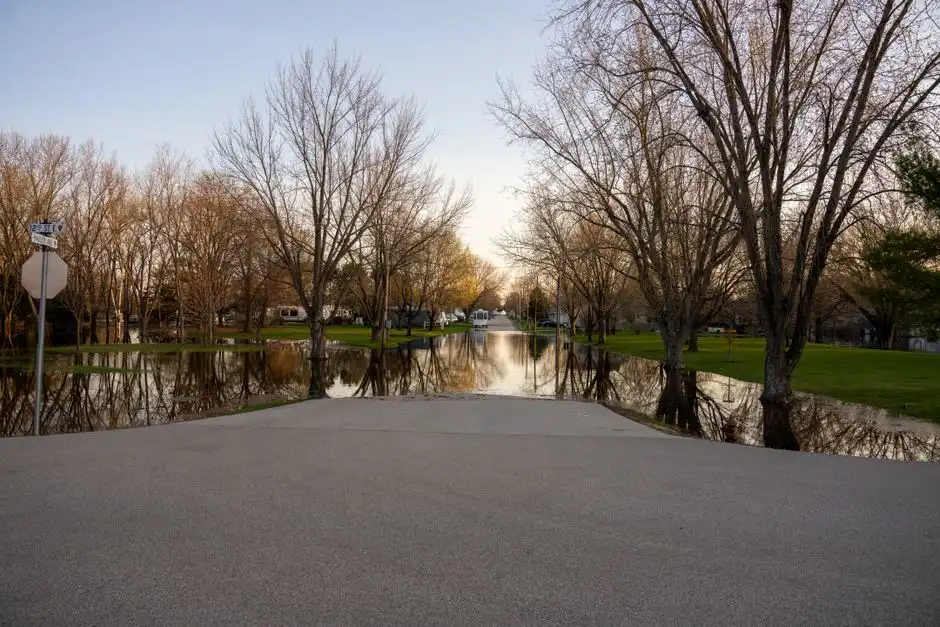
Fort Smith and the River Valley flood because the Arkansas and Poteau rivers sit in a narrow valley that drains a huge upstream watershed, so heavy rain in the Ozarks can raise the water here even when it barely sprinkles in town. That combination of river backwater, flat clay ground, and 60-plus inches of annual rainfall is why water removal in Fort Smith is a year-round job here, not a spring-only one. Below we cover the specific risks by neighborhood, what extraction and drying cost in 2026, and when a wet floor is a call-a-pro situation rather than a shop-vac situation.
Why the River Valley floods so often
The River Valley is a funnel. Water from the Boston Mountains and the upper Arkansas watershed runs downhill into a channel that narrows right at Fort Smith, and when the Poteau and Arkansas crest at the same time, the combined flow has nowhere to spread except into low-lying streets and yards.
Add the local soil. Most of the ground around Fort Smith is clay-heavy, and clay absorbs water slowly. A two-inch rain in an hour does not soak in - it sheets across lawns, pools against foundations, and finds every crack in a slab or crawl space wall. That is why we get calls after storms that never made the news.
Water removal in Fort Smith, Arkansas is the process of extracting standing water, drying the structure, and documenting moisture so a home does not grow mold after a flood. It is needed whenever water has been sitting more than a few hours, whenever the water came from a river, sewer, or storm surge, or whenever the wet area is larger than a single room.
Two other factors push the risk up. First, the region gets roughly 50 to 60 inches of rain a year, with most of it compressed into spring and late fall storm systems. Second, the freeze-thaw cycle in January and February cracks pipes and splits supply lines in older homes, which turns a cold snap into an indoor flood. We handle that side of the work through Frozen Pipe Water Removal in Arkansas, and it is one of the most common winter calls we run in this part of the state.
The local flooding risks Fort Smith homeowners actually face
Local flooding risks in Fort Smith and the River Valley Arkansas break into four categories, and each one needs a different response.
River and creek backwater
When the Arkansas River runs high, storm drains that normally empty into it stop draining. Water backs up into streets, then into yards, then under doors. This is the flood that hits the lowest blocks first and recedes last.
Flash flooding from intense rain
A slow-moving thunderstorm can drop three inches in 90 minutes. Creeks like Massard, Vache Grasse, and the smaller tributaries around Fort Smith jump their banks fast, and water crosses roads that were dry an hour earlier.
Groundwater and sump failure
Even without a storm, a rising water table pushes water up through basement floors and crawl space dirt. Sump pumps that ran fine all summer quit on the first heavy fall rain, and the pit fills in under an hour. That is a sump pump failure cleanup Arkansas job - the pump is the symptom, the water is the emergency.
Plumbing failures during cold snaps
Pipes in unheated crawl spaces and exterior walls freeze, split, and then release when they thaw. A half-inch split line can dump 200 to 400 gallons into a home before anyone notices.
- River backwater: slow rise, wide footprint, often contaminated.
- Flash flooding: fast rise, short duration, debris-heavy.
- Sump and groundwater: hidden, slow, and mold-friendly.
- Burst and frozen pipes: clean water at first, but hours of flow.
Which Fort Smith neighborhoods take on water first
The blocks closest to the Arkansas River and the Poteau confluence flood first, and the older housing stock in those areas makes the damage worse. Homes built before 1980 often have cast-iron drains, pier-and-beam foundations, and crawl spaces that hold moisture for weeks.
We see the same pattern every spring: low blocks near the river, older homes along the creek corridors, and rentals where nobody is home when the water comes in. If you are in one of those areas, our team covers Water Removal in Fort Smith, Arkansas with 24/7 dispatch, and we know which streets drain last.
Outside Fort Smith proper, the same risks show up across the River Valley. Conway sits on a different watershed but deals with the same clay soil and flash-flood creeks, and we run Water Removal in Conway for homeowners who get water in a finished basement after a summer storm.
What water removal in Fort Smith costs in 2026
Typical 2026 pricing for water removal in Fort Smith runs $1,200 to $3,500 for a single affected room, $3,500 to $8,000 for a finished basement or multiple rooms, and $8,000 and up when a crawl space, HVAC system, or sewage-contaminated area is involved.
What drives the number:
- Water category. Clean supply-line water is the cheapest to handle. Sewage and river water are category 3 and require disposal, disinfection, and sometimes removal of drywall.
- Square footage. Extraction and drying are priced by the affected area, not the whole house.
- Materials. Carpet, pad, and engineered hardwood usually come out. Tile and concrete often survive.
- Drying time. Most jobs take 3 to 5 days of equipment run time. Wet crawl spaces can take 7 to 10.
Insurance usually covers sudden and accidental water damage - a burst pipe, a failed water heater, a storm-driven flood if you carry flood coverage. It rarely covers long-term seepage you could have caught earlier. We document moisture readings and photos from day one so your adjuster has what they need.
What to watch out for after a flood
The mistakes we see most often are the ones that turn a two-day job into a two-month rebuild.
- Waiting to see if it dries on its own. Mold can start colonizing wet drywall and carpet within 24 to 48 hours. By the time you smell it, the colony is already established.
- Running a shop vac and calling it done. A shop vac pulls surface water. It does nothing for the moisture inside the wall cavity, under the baseboard, or in the subfloor.
- Pointing box fans at the floor. Household fans move air but do not lower the dew point. Without dehumidification, you are just circulating damp air.
- Skipping the crawl space. Water that drains out of a basement often ends up in the crawl space, where it feeds rot and mold for months.
- Not documenting before cleanup. If you toss the ruined carpet before photographing it, your adjuster has nothing to price.
One more: do not assume the water is clean. River water, storm surge, and any water that has touched the ground outside is contaminated. That is Flood Water Removal in Arkansas territory, and it needs disinfection, not just drying.
When to call a professional
Call us when water has been sitting more than a few hours, when the affected area is bigger than one room, when the water came from outside or from a drain, or when you can smell that musty, wet-cardboard odor that means mold is already working.
AR Water Remover Pros handles the whole job - extraction, drying, moisture mapping, and documentation - so you are not coordinating three contractors while your floors cup. If the water is still rising or you can hear it running, shut off the main and get out of the affected area first. Then call.
Frequently Asked Questions
Who does water removal in Fort Smith Arkansas?
AR Water Remover Pros provides 24/7 emergency water removal in Fort Smith and across the River Valley, including extraction, structural drying, and moisture documentation. We handle river flooding, burst and frozen pipes, sump failures, sewage backups, and storm water intrusion for homes and small commercial buildings.
What are the flooding risks in Fort Smith River Valley?
The main risks are Arkansas and Poteau river backwater, flash flooding from intense storms, groundwater pushing through basement and crawl space floors, and burst or frozen pipes in winter. Clay soil and 50 to 60 inches of annual rain make all four worse than in most of Arkansas.
How much does water removal cost in Fort Smith?
In 2026, expect $1,200 to $3,500 for one room, $3,500 to $8,000 for a basement or multiple rooms, and $8,000 and up for crawl space or sewage-contaminated jobs. Most insurance policies cover sudden water damage, and we document everything for your claim.
How long does water removal and drying take?
Extraction usually takes 2 to 6 hours. Drying equipment runs 3 to 5 days for a typical room and 7 to 10 days for a wet crawl space. We check moisture readings daily and pull the equipment when the structure is actually dry, not on a fixed schedule.
Can I stay in my house during the drying process?
Usually yes for a single-room job. If the water was contaminated, if the HVAC system was affected, or if drying equipment is running in the only bedroom, we will tell you up front whether staying is practical. Most families stay home through the process.
Get help with Water Removal in Fort Smith
If your floors are wet, your crawl space is holding water, or you can already smell mold, call us now - we dispatch 24/7 across Fort Smith and the River Valley.
Call (833) 640-1438 and we will get water out of your home today.