How to shut off your water heater before a leak floods your home
A leaking water heater can dump 40+ gallons into your Arkansas home in under an hour. Here is exactly how to shut it off fast and limit the flood damage.
Shutting off your water heater before a leak floods your home means closing the cold-water inlet valve on top of the tank, then killing the gas or power so the unit stops heating. Do that within the first few minutes and you usually limit the damage to a wet floor instead of a flooded room. A standard 50-gallon tank can release 40 to 60 gallons of water in under an hour once a fitting fails, and that water spreads fast across Arkansas slab foundations and into hallways. This guide walks you through the exact valve locations, the shutdown order, and what to do once the water is already on the floor.
Why a water heater leak floods a home so fast
A water heater leak floods a home fast because the tank stays pressurized the entire time water is flowing into it. The inlet line feeds the tank at 40 to 80 PSI, and when a fitting, T&P valve, or the tank itself fails, that pressure keeps pushing water out until you close the supply. A pinhole leak at 60 PSI can put out 2 to 5 gallons per minute. That is 120 to 300 gallons an hour.
Most Arkansas homes have the water heater in a garage, a utility closet, or an attic. Garage placement sounds safe until you realize the water runs toward the house, not the driveway. Utility closets sit next to bedrooms and kitchens. Attic units send water straight down through ceilings and insulation. We see all three setups across the state, and the attic ones cause the most expensive damage because the water travels before anyone notices.
Sediment is the other factor. Arkansas water carries a fair amount of calcium, and over 8 to 12 years that sediment settles on the tank bottom and overheats the steel. The tank rusts from the inside out, then splits along a seam. By the time you see water on the floor, the tank is already done.
Where is the water heater shut off valve in an Arkansas home?
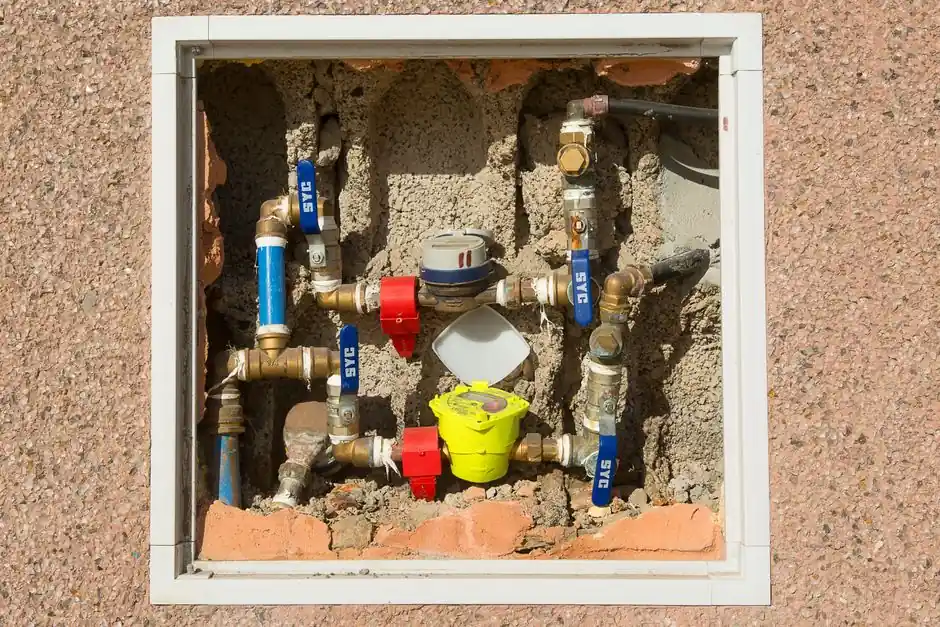
The water heater shut off valve sits on the cold-water inlet pipe, which is the pipe entering the top of the tank on the right side when you face the unit. It is usually a brass gate valve, a ball valve with a lever handle, or a small wheel handle. Some Arkansas homes also have a second valve on the hot-water outlet, but the cold side is the one that stops the flood.
If you cannot find a valve on the tank itself, look for the main shutoff. In most Arkansas homes that is either at the street meter box or where the supply line enters the house, often in a crawl space or near the front hose bib. Turning the main off stops the water heater leak and every other fixture at the same time.
Two things worth checking before you ever need this: whether the valve handle actually turns, and whether the tank has a drip pan underneath. Old gate valves seize up after a few years of Arkansas hard water. Test yours once a year by turning it a quarter turn and back. If it will not budge, have a plumber replace it before it matters.
How to shut off your water heater in four steps
Shut off the water first, then the heat source. Doing it in that order prevents the tank from running dry while the burner or element is still firing, which can crack the tank or burn out the element.
- Close the cold-water inlet valve. Turn the handle clockwise until it stops. A ball valve needs a quarter turn. A gate valve needs several full turns.
- Turn off the gas or power. For a gas unit, turn the dial on the gas control valve to PILOT or OFF. For an electric unit, flip the double-pole breaker in your panel to OFF.
- Open a hot-water tap. Open the nearest hot faucet to relieve pressure and drain the lines. This slows the leak immediately.
- Connect a hose to the drain valve. Run it to a floor drain, driveway, or bucket. Draining the tank removes the remaining 40 to 50 gallons before it ends up on your floor.
If the leak is coming from the T&P relief valve or a fitting rather than the tank body, the same steps apply. You are buying time, not fixing the unit. Once the water stops, the real work begins.
How to stop a water heater leak fast in Arkansas
Stop the water heater leak fast in Arkansas by closing the inlet valve within the first 60 seconds, then cutting power or gas before you do anything else. Every minute the tank stays pressurized adds roughly 2 to 5 gallons to the puddle. After that, your priorities shift from stopping the water to getting it out.
Here is the order that limits damage:
- Kill the water and heat source.
- Move furniture, rugs, and anything cardboard away from the wet area.
- Pull up wet carpet edges so the pad can dry.
- Run box fans and a dehumidifier if you have them.
- Call for extraction if the water has spread more than a few feet or soaked into drywall.
Water heater leaks are one of the most common calls we run. The tank itself is only half the problem. Water wicks into baseboards, insulation, and subfloor within the first hour, and in Arkansas humidity that moisture does not dry on its own. Mold can start colonizing wet drywall in 24 to 48 hours. If the tank sits in a closet or on a second floor, the water often reaches rooms you have not checked yet.
For tanks that fail in a garage or utility room, Standing Water Removal in Arkansas handles the shallow pooling that fans cannot touch. When the tank is upstairs or in an attic and water has come through the ceiling, that is a bigger job and we treat it like Water Heater Leak Water Removal in Arkansas with ceiling, wall, and floor drying included.
Common mistakes that make the flooding worse
The biggest mistake is turning off the gas or breaker first and leaving the water running. The tank keeps refilling and leaking the whole time you are walking to the panel. Water first, always.
Other mistakes we see on arrival:
- Forcing a seized valve. If the handle will not turn, stop. A snapped stem turns a slow leak into a full-flow flood.
- Using a shop vac on more than an inch of water. It clogs, overheats, and does not pull water out of carpet pad anyway.
- Waiting to see if it stops. A pressurized tank does not stop leaking on its own.
- Running the AC to dry the room. It cools the air but does not remove moisture. You need airflow and dehumidification.
- Skipping the ceiling check. If the tank is upstairs, water pools above the ceiling and lets go hours later.
One more: do not relight the pilot or flip the breaker back on until the tank is full again. A dry tank with a live heating element cracks in minutes.
What do I do if my water heater leaks in Arkansas?
If your water heater leaks in Arkansas, shut off the inlet valve and power source, drain the tank, then call for water removal the same day. Do not wait to see if it dries. Arkansas summers run 70 to 90 percent humidity, and spring storms push that higher. Wet drywall and insulation in that climate stay wet, and wet building materials are where mold starts.
Once the water is out, you have a second decision: repair or replace the tank. A failed fitting or valve on a tank under 8 years old is usually worth fixing. A leaking tank body on a unit over 10 years old is not. The average lifespan for a tank-style heater in Arkansas water is 8 to 12 years, and once the steel is compromised, patching it just moves the leak.
We handle the water side so you are not trying to dry a utility room with a box fan. Our team extracts standing water, sets drying equipment, and monitors moisture until the structure reads dry. If the tank is in a basement, that often means Basement Water Removal in Arkansas because slab and block walls hold water longer than a wood subfloor. In homes where the heater sits in a low crawl space, we run Crawl Space Water Removal in Arkansas to pull water out before it soaks the floor joists.
When to call a professional
Call a professional when the water has spread beyond a few square feet, when it has reached carpet, drywall, or a ceiling, or when you cannot get the tank to stop leaking. Those are the three situations where a shop vac and a fan will not cut it.
You should also call if the tank is in an attic, if water has come through a ceiling, or if the leak happened overnight and sat for hours. Water that has been sitting for 12 hours or more has already started working into the structure. We see this constantly in older Arkansas homes where the heater is tucked in a closet off a hallway. By morning, the water has reached two or three rooms.
AR Water Remover Pros handles water heater leak cleanup across Arkansas. We extract the water, dry the structure, and check for hidden moisture behind walls and under floors. You get a dry home and a clear answer on what needs to happen next.
Frequently Asked Questions
How do I shut off my water heater in Arkansas?
Close the cold-water inlet valve on top of the tank by turning it clockwise, then turn the gas dial to PILOT or flip the breaker for an electric unit. Open a hot tap to relieve pressure and drain the tank through a hose. The whole process takes about 5 minutes.
What do I do if my water heater leaks in Arkansas?
Shut off the water and power first, then drain the tank. Call for water removal the same day, especially in summer when Arkansas humidity sits between 70 and 90 percent. Mold can begin within 24 to 48 hours on wet drywall and insulation.
Can a water heater leak cause flooding in Arkansas?
Yes. A 50-gallon tank under normal household pressure can release 40 to 60 gallons in under an hour, and a pinhole leak at 60 PSI puts out 2 to 5 gallons per minute. That is enough to flood a utility room, hallway, or garage and soak into adjacent rooms.
Where is the water heater shut off valve in an Arkansas home?
It is on the cold-water inlet pipe entering the top of the tank, usually on the right side. If there is no valve on the tank, use the main shutoff at the meter box or where the supply enters the house.
How long does it take to dry out after a water heater leak?
Most single-room leaks dry in 3 to 5 days with professional extraction and air movers. Leaks that reached drywall, carpet pad, or a second floor take 5 to 7 days. We monitor moisture daily until the structure reads dry.
Get help with Water Removal in Arkansas
If your water heater has already leaked, the water is not going to dry itself out. We extract it, dry the structure, and get your home back to normal. Call AR Water Remover Pros at (833) 640-1438 and we will be on our way.